Showing posts with label beginning. Show all posts

Tuesday, April 27, 2010

The Need to Capture Your Attention


So, yesterday we looked at beginnings that have been overdone and are probably not the best way to capture the readers attention, but what makes a good beginning?

I wish there was some easy way to answer this. Every writer always searches for the perfect way to start a story. They search for that one perfect line that will dangle the bait in front of the reader's eyes just waiting for the chance to hook them and reel them into the rest of the story. I could just make a list of what makes good openings, but the truth is that the best openings are unique to each novel.

Instead, I'm going to pick several great openings (hey, they've been voted upon) and analyse what makes them so great. And, just because I'm mean, I'm not going to tell you where the quotes come from. So, here's a challenge, can you guess where these openers come from?

  1. Call me Ishmael.
    What is it about this line that everyone loves? It's simple, plain and introduces the reader to the character straight away. The conversational way it is written just invites the reader to snuggle in to a nice and cosy chair and follow Ishmael on his journey.

  2. It was a bright cold day in April, and the clocks were striking thirteen.
    At the first glance, doesn't this just look like it's breaking a big NoNo. It starts by addressing what the day looks like, but then the reader is drawn in by the unusual. Since when do clocks strike 13?

  3. In my younger and more vulnerable years my father gave me some advice that I've been turning over in my mind ever since.
    This sentence introduces the character first up. It is not trying to do anything fancy, just letting the character letting the character mull over what advice he was given. Through the use of "younger" and "vulnerable" it's suggesting that the character has made some developments before the story has even started, now the reader wants to know about the character and follow them on this journey.

  4. We went to the moon to have fun, but the moon turned out to completely suck.
    This is a fun little sentence, which also draws the readers attention. It is taking something unusual that the reader can only hope to imagine, after all, we can't really go to the moon now, can we?

  5. Mr. and Mrs. Dursley, of number four, Privet Drive, were proud to say that they were perfectly normal, thank you very much. They were the last people you'd expect to be involved in anything strange or mysterious, because they just didn't hold with such nonsense.
    This sentence introduces some of the characters of the novel. It also introduces the normal world. It also hints that something has happened to alter this normal world and you want to find out what "strange" or "mysterious" thing has happened.

  6. Far out in the uncharted backwaters of the unfashionable end of the western spiral of the Galaxy lies a small unregarded yellow sun.
    This sentence introduces the setting. It's also introducing the unusual.

  7. When Mr Bilbo Baggins of Bag End announced that he would shortly be celebrating his eleventyifirst birthday with a party of special magnificence, there was much talk and excitement in Hobbiton.This passage introduces the character. It also has a fun voice and introduces the language.

  8. The man in black fled across the desert, and the gunslinger followed.Short and sweet. It introduces a couple of characters. By not giving too much description or names of the characters, it creates an aura of mystery. Who are these characters? The reader has to read on to find out.

  9. When I wake up, the other side of the bed is cold. My fingers stretch out, seeking Prim’s warmth but finding only the rough canvas cover of the mattress. She must have had bad dreams and climbed in with our mother. Of course she did. This is the day of the reaping.
    This passage introduces the character (also another that could be said is bad by having the character waking up, but it works). It introduces her word, and the reader wants to find out what's special about this day. What is the reaping?

  10. My mother used to tell me about the ocean. She said there was a place where there was nothing but water as far as you could see and that it was always moving, rushing toward you and then away. She once showed me a picture that she said was my great-great-great-grandmother standing in the ocean as a child. It has been years since, and the picture was lost to fire long ago, but I remember it, faded and worn. A little girl surrounded by nothingness.
    This introduces the character as well as eluding to the conditions as to which the character is living. This is done by saying that the character only knows of such a normal setting as the ocean. Every reader should know what an ocean is, so the writer is grabbing the reader's attention while doing some good world building.

So, by looking at the ten passages above can you see some pattern forming as to what makes up great first sentences? It starts with a "C" and ends with a "haracter". That's right. Most of the above start with a character. If you take pages to introduce the character then the reader has no one with which to identify with.

Another element that could add interest to the first sentence is through the hint of the unusual. I was more drawn to the sentences that gave some clue that not everything was as it should be. There was something different with the world that is being created, or there was a hint that something was about to happen.


How did you go with picking where the first lines comes from? Can you think of any other good examples? Or, do you disagree with some of these on the list?

Monday, April 26, 2010

We have to begin somewhere

Last week I focused on can make good or bad endings. Well, even though you need to make the reader want to return for the next book, it's even more important to capture their interest to want to read the book to begin with.

Beginnings can either make or break the readers view of the story. It is said that the average person takes five seconds to form an opinion on a person or place after the first view, the same can be said with books. Readers often know what they're in for within the first five pages, so grabbing their attention from the get go has to be the main objective of any writer.

Instead of focusing on what makes a good beginning, let's have a look at some of the train wrecks misguided stories I've seen, and let's see if you've done any of these or have been tempted to.

  1. It was all a dream...
    I bet you can probably name several books that start like this. The writer definitely captures the attention of the reader, drawing them inside the events of a fast paced action sequence. You're sitting on the edge of the seat, wondering whether the hero will make it through (yes, it's only the first chapter, but still they could die... it's been done), and then... and then... the character wakes up.

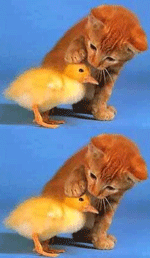
    All the events that the reader's been following turns out to be nothing more than a dream. So, everything that you've learnt up until this point is worthless and will never be brought up again... so please enjoy this cute animation of a kitten with a duck.


  2. The silly little prologue that makes no sense with the rest of the book and never comes back...
    Just like the dream, but is slightly - somehow - relevant. Some fraction of it may (or may not) appear somewhere throughout the story at which point you'll find out that it was not as near impressive as it was made out to be.

    These beginnings only aim to set up a hook and reel the reader in with promises of big character drama towards the end of the book. Often they are actually a foreshadow of the events that will take place near the end, so when you finally do get up to that point, the writer can head in a totally different direction just so long as they make a brief mention that this happens.

  3. Phone book disguised as introduction
    Once upon a time in the land of Fousuold, in the Barony of Reefutal, King Juujikli consulted his beloved advisor Suolaoud in the matter of Luernua who was betrothed to Juljike after the tragic death of Wearouljdo four Faaulke moons ago...

    This kind of beginning often happen in fantasy stories and is as easy on the reader as swallowing a banjo. Long lists of places, people and customs are rattled off in quick succession like a machine gun loaded with tape worms. If anyone finds any logical reason for mentioning this many people, places, and made up words that require the reader to collect them and create their own dictionary all in the first paragraph please let me know, I am dying to find out.

  4. How I spent my Summer Vacation
    Dramatic event that happened long ago in the retelling of the MC's past. Here, the reader is led to believe that this event had a serious effect upon the characters and plot. In truth it is just an effort to create a backstory that won't be able to fit into the bulk of the book so it is shoehorned at the beginning.

    Yes, the event may prove to be important and may have altered the character (much like being dropped into a vat of radioactive chemical waste would), the true reason it can't be fit into the rest of the book is because it's practically useless to the story that's being told.

  5. THE PROPHECY
    Bmp...bmp...bmp!

    So, your MC is the "Chosen One". For messaihic figure press 1... for deadly battle of intertwined foes press 2... for the only person in the world to stop Armagedon press 3... for dramatic tale of true love press 4... for character getting up, going through an utterly pointless life and dying in a meaningless, undignified death at the end press 5... thank you and have a nice day.

    Prophecy. The easiest way for a writer to join together the tangled threads of a plot, especially if the character has no true purpose and is just ambling through the story. Occassionally this style can be done well, if planned ahead.

    These beginnings usually take the form of Prologues written in fancy italics and doesn't even involve the MC or anyone of specific nature... although most of the times it is the bad guy learning the prophecy that starts the story.

Don't get me wrong, some of these beginnings can be beneficial. Some times they're just not. I can say that I've been guilty of using a couple of these every now and again... believe it or not, I rewrote the entire beginning of my MS to eliminate the dream sequence opening. Have you ever done any of these beginnings? Or, are there other beginnings that you see that you hate, on the other hand, do you like some of these beginnings (because it's okay if you do)?

Tuesday, April 6, 2010

Crafty Beginnings

At the moment I'm staring at the blank pages of my currently Untitled Heroes/Villains novel just trying to figure out what to write.

I don't know about anyone else, but I hate beginnings. I never know where to start or what to say. They say you've only got ten seconds to hook a reader, and I believe this 100%. When I read a book and I'm not instantly drawn into the story I find it very hard to want to continue (even though I often push on and hope that it improves).

On various blogs there are various suggestions as to what a novel should not start with:
  1. Dialogue - the reader doesn't know why they should care about the character.
  2. Starting too early - find the place in the story with the most dramatic tension.
  3. Dream sequence - a reader will feel cheated if the first chapter turns out to be nothing but a dream.
  4. Prologue - this seems to be the biggest no no in novel beginnings, both agents and publishers hate them.
  5. Too much information - don't load the beginning with all the character's back story.
  6. Endless description - don't start with describing what time of day it is and how the weather's like, nobody wants to know.
  7. Using a cheesy (cliched) hook - getting the readers attention is the desired goal, but don't use a cheesy hook that screams out "look at me".
Nathan Bransford has a great post about books beginning with dialogue
Kristin Nelson has a great post about  why prologues often don't work

With so many things stating what 'not' to do, how can a novel start that will draw the reader in? One of the most important things to starting a story is to establish that the protagonist has something significant at stake.

So, how do you choose how to start your novels? Do you try to avoid any of the things listed above?

Tuesday, March 16, 2010

Blank Page Syndrome


'You can approach the act of writing with nervousness, excitement, hopefulness, or even despair at the sense that you can never completely put on the page what's in your mind and heart. You can come to the act with your fists clenched and your eyes narrowed, ready to kick ass and take down names. You can come to it because you want a girl to marry you or because you want to change the world. Come to it any way but lightly. Let me say it again: you must not come lightly to the blank page.'
Stephen King: On Writing: A Memoir of the Craft, 2000

You've got to just love Stephen King. This quote is exactly how I'm feeling at the moment, a little nervous and excited, but mostly I'm staring at the blank page.

Starting a new novel might seem all well and good, after all, don't I have a story and a character? Hey, I even have a title for the novel (and for me, that's probably the hardest thing I've got to decide on). But, how do I start the story? 

The beginning has to jump off the page and grab the reader's attention. I don't know which is harder, the beginning or the ending, both have to leave an impression with the reader or they will give up (I've known several books that I've started to read but lost interest by chapter three... I'm going to get around to finishing them sometime).

The best time I've been given about beginnings is that the story is best told in the midst of the action, even if you have to write and then cut a couple of chapters before chapter one actually starts. There is only one thing that helps when it comes to beginning a novel, and that's to start. Hey, a novel will never be written unless you put words on that blank page and get started. 

So, how do you approach starting a new novel? 

I guess I'm going to approach mine by writing it.
 
Blog Design by Imagination Designs all images from the Her Lullaby kit by Irene Alexeeva